Tartuffe
A razor sharp comedy about hypocrisy, vanity and the dangerous pleasure of believing exactly what you want to hear.
Why it matters right now
Tartuffe remains one of the clearest plays ever written about public morality used as a form of personal power. Molière understood how easily confidence can disguise manipulation and how quickly families, institutions and entire societies can hand authority to people who perform virtue convincingly enough. In 2026, after years shaped by culture wars, online outrage and charismatic public figures building influence through carefully managed identities, the play feels startlingly familiar. Tartuffe succeeds because he tells people what they want to believe about themselves. He flatters their sense of righteousness while quietly positioning himself to take control of everything around them.
The story in three sentences
Orgon, a wealthy Parisian patriarch, becomes obsessed with Tartuffe, a seemingly devout holy man he has invited into his household. Despite repeated warnings from his family, Orgon trusts Tartuffe completely and plans to marry his daughter to him while signing over control of his estate. As Tartuffe’s true intentions become impossible to hide, the family races to expose him before their lives are destroyed by Orgon’s blindness.
The moment you will remember
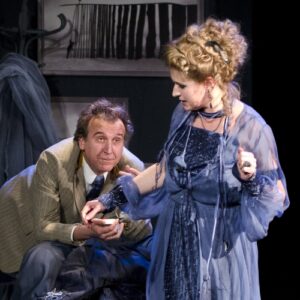
Elmire hiding Orgon under the table. In one of the great comic scenes in theatre, Orgon’s wife invites Tartuffe to seduce her while her husband secretly listens from beneath the furniture. The scene works as farce, with Orgon trapped in silence while the truth unfolds inches away from him, though it also carries real tension and humiliation. You watch a man forced to hear exactly how foolish he has been while still struggling to admit it to himself.
Who it is for
Read or see this if: you enjoy comedies where the jokes have genuine bite. If you are interested in plays about power inside families and the strange psychology of manipulation. If you want to see how a seventeenth century text can still feel completely alive when performed well.
Be aware if: broad comedy and heightened theatrical styles are not usually your thing. Productions often lean into exaggeration, rhythm and physical humour, though the emotional stakes underneath are very real.
The debate
One of the enduring questions around Tartuffe is whether the play attacks religion itself or the people who weaponise religious language for personal gain. Molière insisted he was exposing hypocrisy rather than faith, though the play caused outrage and was banned for years after its first performances. Modern productions still wrestle with how sharply to frame Tartuffe’s manipulation. Some present him as a smooth political operator. Others lean into genuine menace and coercive control. The play keeps working because it understands a deeply uncomfortable truth: intelligent people can become astonishingly vulnerable once admiration turns into devotion.
Cover photo: NWU Theatre 04-05 (CC BY-NC 2.0)