Marx in Soho: A Play on History
A furious, funny and unexpectedly human solo play that drags Karl Marx out of history books and drops him directly into the chaos of modern life.
Why it matters right now
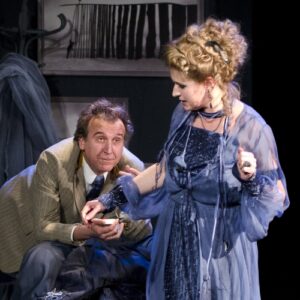
Very few political plays from the late twentieth century feel as alive as Marx in Soho. Howard Zinn imagines Karl Marx returning to Earth for a single hour in order to defend himself against decades of distortion, accusation and misunderstanding. The result feels startlingly relevant in 2026, when conversations about capitalism, inequality and labour have moved back into mainstream culture with fresh urgency. Housing costs continue to rise, wealth gathers in fewer hands and entire generations feel locked out of economic stability. Zinn understands that political ideas become emotionally powerful when attached to ordinary lives, exhausted workers and family struggles. The play turns Marx from a symbol into a person who worries about rent, argues with his wife and watches governments protect wealth at the expense of human beings.
The story in three sentences
After decades in the grave, Karl Marx receives permission to return briefly to Earth and explain what he actually believed. Through stories about poverty, revolution, exile and family life, he attempts to separate his own ideas from the dictators and regimes who later claimed his name. As the hour unfolds, Marx becomes increasingly frustrated by how little the world seems to have changed since the nineteenth century.
The moment you will remember
At one point Marx stops sounding like a philosopher entirely and speaks instead about his wife Jenny pawning possessions so the family could survive another week. The great political theorist suddenly becomes a husband watching his children grow up in poverty while wealth surrounds him everywhere. It shifts the emotional centre of the play. The arguments about economics matter intellectually, yet the lasting impact comes from hearing how political systems shape kitchens, marriages and ordinary daily humiliations.
Who it is for
Read or see this if: you enjoy political theatre that values storytelling as much as ideology. If you are interested in history presented through personality and argument rather than academic distance. If you want a solo show that gives an actor room for humour, anger, intimacy and direct audience connection.
Be aware if: overtly political theatre tends to frustrate you. The play openly challenges capitalism and asks the audience to reconsider ideas many people have been taught to dismiss automatically.
The debate
Marx in Soho raises an uncomfortable question that still divides audiences. Can Marx’s ideas be separated from the authoritarian governments that later claimed inspiration from his work, or does history make that impossible? Zinn clearly believes Marx deserves a fairer hearing than he usually receives in popular culture. Critics of the play argue that it softens the darker consequences attached to communist movements across the twentieth century. Supporters respond that the play is interested in inequality, exploitation and labour rather than defending dictatorships. The tension gives the play much of its energy because the audience spends the evening deciding whether Marx sounds prophetic, naive or disturbingly accurate.