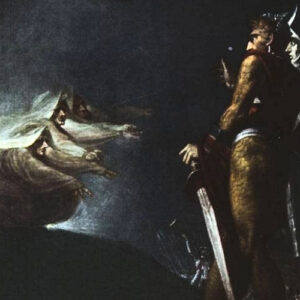
Doctor Faustus
A thrilling and unsettling play about ambition, vanity and the terror of realising too late that knowledge cannot save you from yourself.
Why it matters right now
Doctor Faustus speaks directly to an age obsessed with limitless achievement. Faustus wants total mastery over the world. Academic success no longer satisfies him. Religion feels restrictive. Ordinary human limits feel intolerable. In 2026, when technology promises constant self improvement and public life rewards people who push beyond ethical boundaries in pursuit of influence, Marlowe’s play feels startlingly contemporary. It captures the intoxicating belief that intelligence alone can free someone from consequence. It also understands how quickly power can become emptiness once desire loses any moral direction.
The story in three sentences
Faustus, a brilliant scholar dissatisfied with conventional learning, makes a pact with the devil in exchange for twenty four years of unlimited knowledge and magical power. Assisted by the demon Mephistopheles, he travels through Europe performing extraordinary feats, humiliating rivals and entertaining powerful figures. As the end of the bargain approaches, Faustus begins to understand the horrifying price of what he has chosen.
The moment you will remember
The final hour before midnight. Faustus stands alone on stage begging time itself to stop as the clock moves steadily toward his damnation. He pleads with God, with nature, with the universe around him. He imagines mountains falling over him and the earth opening beneath his feet. Few scenes in theatre capture panic with such raw intensity. The audience watches a man whose confidence once seemed limitless discover that fear has stripped away every illusion he built around himself.
Who it is for
Read or see this if: you enjoy plays filled with big ideas, supernatural spectacle and philosophical argument. If you are interested in stories about ambition consuming the people who pursue it. If you want to experience one of the defining works of Elizabethan drama outside Shakespeare.
Be aware if: themes of damnation, spiritual despair or eternal punishment feel emotionally difficult. The play wrestles constantly with questions of salvation, guilt and the possibility of forgiveness.
The debate
Critics and directors have argued for centuries about whether Faustus truly deserves his fate. Some see him as a warning against arrogance and forbidden knowledge. Others view him as a tragic figure trapped by a cruel religious system that offers almost no room for human weakness. The play itself refuses easy certainty. Faustus commits terrible errors and wastes the extraordinary gifts he receives on petty tricks and displays of ego. At the same time, Marlowe gives him moments of profound self awareness and terror that make his suffering painfully human. The result is a play that asks whether redemption remains possible once someone has spent years convincing themselves they are already beyond saving.